

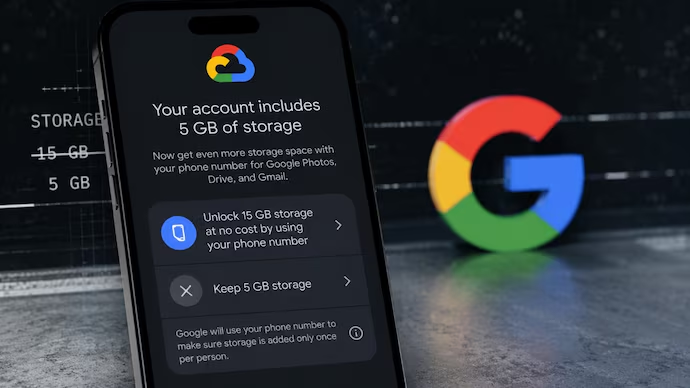
For over a decade, Google has been one of the most generous providers of free cloud storage in the tech industry. Every new account came with a standard 15 GB of space shared across Gmail, Google Drive, and Google Photos. However, in a quiet shift that has recently come to light in May 2026, Google is reportedly slashing that starting limit to just 5 GB for new users. While this change might seem like a major downgrade, there is more to the story than just a simple reduction in capacity.
Why Google is Limiting Free Storage for New Accounts
The decision to lower the default storage limit to 5 GB appears to be part of a strategic move to improve account security and curb platform abuse. Google has officially updated its support documentation language from a flat 15 GB of storage to up to 15 GB at no charge. This subtle change in wording signals that the full allocation is now conditional rather than a guaranteed right for every signup.
One of the primary reasons for this change is the prevention of spam and the creation of fake accounts. By limiting the initial storage, Google can discourage bots from creating massive numbers of accounts for data storage or malicious activities. Additionally, the increasing costs of maintaining high performance data centers and a global shortage of storage hardware have likely contributed to this shift in policy.
The Phone Verification Trick to Unlock 15 GB
The good news for most genuine users is that the 15 GB limit is not entirely gone. During the account creation process, Google now presents users with a choice. A new account starts with 5 GB by default, but users can immediately unlock the full 15 GB allocation by linking and verifying a mobile phone number.
The notification within the signup flow explicitly states that users can keep the 5 GB or unlock 15 GB at no cost by using a phone number. This verification helps Google ensure that the 15 GB bonus is granted only once per person. It acts as a digital identity check to prevent users from hoarding free space across dozens of anonymous accounts. While this might raise privacy concerns for some, it remains the only official way to regain the storage amount we have all grown accustomed to.
How This Compares to Other Cloud Providers
With this new 5 GB baseline, Google is now aligning its free tier more closely with its main competitors. Apple iCloud and Microsoft OneDrive have both offered a standard 5 GB of free storage for years. By moving to this model, Google is effectively ending its era of being the outlier that offered triple the space of its rivals without any strings attached.
- Google Drive: 5 GB default (up to 15 GB with verification)
- iCloud: 5 GB
- OneDrive: 5 GB
- Dropbox: 2 GB
While Google still offers the highest potential free storage among the big four, the requirement of a phone number adds a layer of friction that was never there before. For many, this will be a minor inconvenience, but for those seeking anonymity, the 5 GB limit will be a significant restriction.
What This Means for Existing Google Users
If you already have a Google account, there is no need to panic. This storage policy change primarily targets new account signups and is currently being tested in specific regions. Existing users who already have their 15 GB or paid Google One plans are not affected by this default reduction.
However, this serves as a timely reminder to manage your digital clutter. With Gmail, Photos, and Drive all sharing the same pool, that space can fill up quickly. It is a good practice to periodically clear out large email attachments and blurry photos to ensure you do not hit your limit unexpectedly. For those who find 15 GB insufficient, Google continues to offer its Google One subscription tiers for expanded storage and additional AI features.
The digital landscape is constantly evolving, and the era of truly unlimited or high capacity free storage is slowly fading. By understanding these new rules, you can ensure you still get the most out of your Google account without spending extra on monthly subscriptions.