

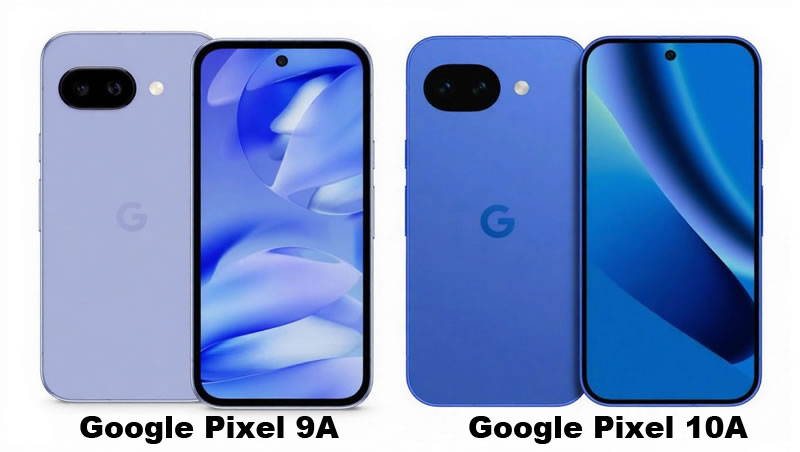
The Google A series has long been the gold standard for shoppers seeking a flagship experience without the flagship price tag. With the recent launch of the Google Pixel 10a on February 18, 2026, many tech enthusiasts are wondering if it offers enough of a leap over the Pixel 9a. While the two devices look remarkably similar at first glance, a few key refinements in durability, connectivity, and charging speed define the new generation.
Design and Durability Improvements
The most immediate change between the Pixel 10a and the Pixel 9a is the refined rear aesthetic. While the Pixel 9a featured a camera bar that was nearly flush with the back, the Pixel 10a has achieved a completely flat rear panel. This eliminates the minor wobble often found when placing a phone on a desk.
More importantly, Google has significantly upgraded the front glass. The Pixel 9a relied on the aging Corning Gorilla Glass 3, which was prone to scratches over time. The Pixel 10a leaps forward to Gorilla Glass 7i, a much tougher material designed for better drop and scratch resistance. If you prefer using your phone without a case, the Pixel 10a is objectively the more rugged choice.
Display Brightness and Outdoor Visibility
Both phones sport a 6.3 inch OLED display with a smooth 120Hz refresh rate. However, the Pixel 10a takes the lead in outdoor usability. Its screen can reach a peak brightness of 3000 nits, which is a noticeable 11% increase over the 2700 nits found on the Pixel 9a. This makes a significant difference when trying to read maps or take photos in direct sunlight.
Performance and the Tensor G4 Chip
Interestingly, both the Pixel 10a and the Pixel 9a are powered by the Google Tensor G4 processor paired with 8GB of RAM. Unlike previous years where the newest A series would receive a new chipset, Google has opted to stick with the G4 for the 10a.
Because they share the same “silicon soul,” you won’t see a massive jump in gaming performance or app opening speeds. However, the Pixel 10a launches with Android 16 and is promised seven years of support, extending its lifespan until 2033, one year longer than its predecessor.
Charging Speeds and Battery Life
Both devices house a substantial 5100 mAh battery that easily provides 24 to 30 hours of use on a single charge. The real upgrade for the Pixel 10a is in how quickly it gets back to full power.
| Feature | Google Pixel 9a | Google Pixel 10a |
| Wired Charging | 23W Fast Charging | 45W Fast Charging |
| Wireless Charging | 7.5W Wireless | 10W Wireless |
| Battery Size | 5100 mAh | 5100 mAh |
The jump to 45W wired charging is a major quality of life improvement for the 10a, though you will need a compatible 45W power brick to see those peak speeds.
New Features and Satellite SOS
The Pixel 10a introduces Satellite SOS to the A series for the first time. This feature allows users to contact emergency services even when there is no cellular or Wi-Fi signal available. It is a peace of mind feature that the Pixel 9a lacks entirely.
On the software side, the 10a brings Camera Coach and Auto Best Take. While the 48MP main camera hardware is identical to the 9a, these new AI tools help beginners frame their shots more effectively and ensure that everyone in a group photo is looking at the lens with a smile.
The Verdict Should You Upgrade
If you currently own a Pixel 9a, there is very little reason to rush out and buy the 10a. The core performance and camera quality remain virtually unchanged. However, if you are looking to upgrade from an older model like the Pixel 6a or 7a, the Pixel 10a is the clear winner. For the same $499 starting price, you get a tougher screen, faster charging, and life saving satellite connectivity.