

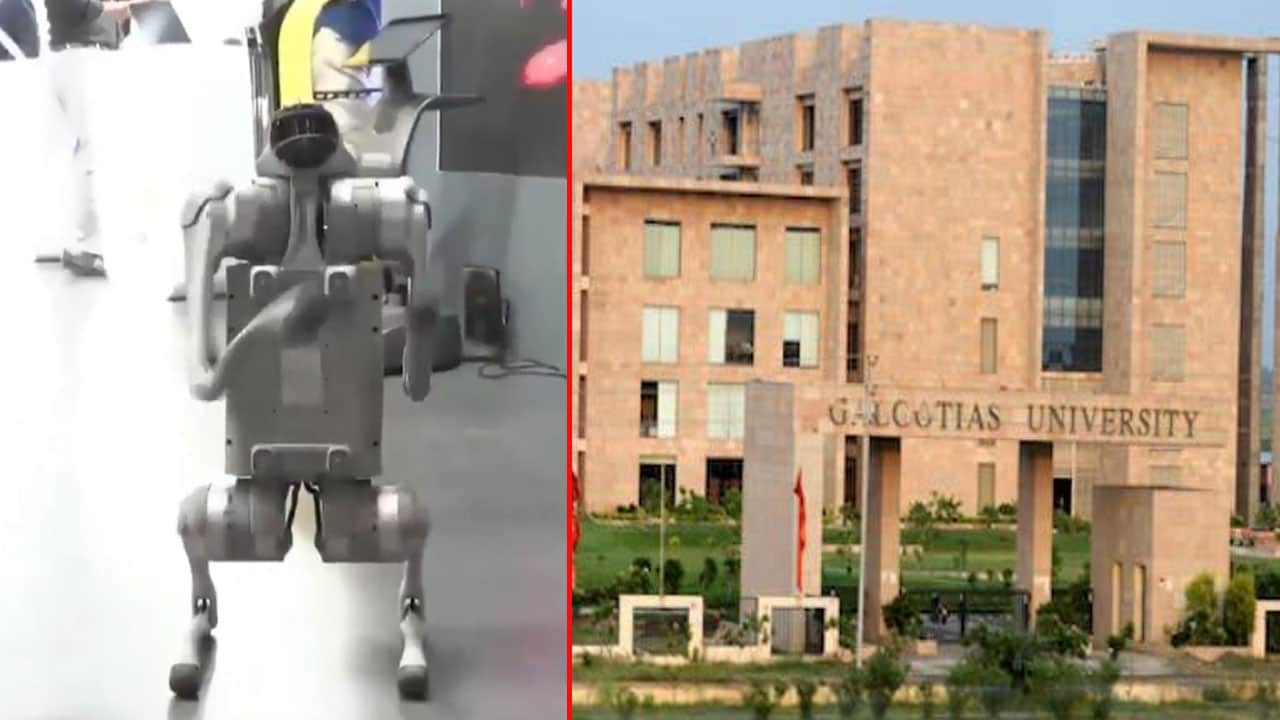
The recent India AI Impact Summit 2026 was intended to be a global showcase of Indian innovation. However, a significant controversy involving Galgotias University captured the spotlight. During the event, a viral video emerged showing a university representative presenting a robotic dog named Orion. The presenter claimed that the robot was a product of the university’s Centre of Excellence and part of a massive 350 crore investment in Artificial Intelligence.
The situation quickly shifted when tech enthusiasts and netizens identified the robot as the Unitree Go2, a commercially available product manufactured by a Chinese robotics firm. This discovery led to allegations of misrepresentation, sparking a heated debate about academic integrity and the transparency of technological claims in India.
The Initial Clarification and Claims of Misinterpretation
As the video gained traction, Galgotias University issued an official statement to address the growing backlash. The university clarified that they had not built the robotic dog and maintained that they never explicitly claimed to have manufactured it. According to the institution, the robot was acquired as a learning tool to help students experiment with cutting edge technology.
The university registrar, Nitin Kumar Gaur, explained that the confusion likely arose from the nuanced difference between the terms develop and development. He suggested that while the university did not create the hardware from scratch, they were working on the development of AI applications using the platform. The university emphasized that their mission is to build minds that will eventually design such technologies in India, even if they currently use global resources for training.
Accountability and the Role of Faculty
Professor Neha Singh, the face of the viral video, also addressed the media to provide context. She took accountability for the lack of clarity in her communication, attributing it to a surge of enthusiasm during the presentation. Singh noted that she is a faculty member in the School of Management focusing on communications, rather than an AI specialist. She argued that the robot still carried its original branding and was never intended to be passed off as a Galgotian invention.
Despite these explanations, the university faced a difficult situation at the summit. Reports surfaced that organizers asked the university to vacate its stall to maintain the authenticity of the expo. Some witnesses even reported that power to the university pavilion was cut off following the identification of the Chinese made robot. This escalation highlighted the sensitivity of the government regarding the promotion of indigenous technology at national forums.
Addressing the Propaganda and Protecting Student Morale
In its subsequent responses, Galgotias University characterized the online backlash as a propaganda campaign designed to tarnish its reputation. The institution expressed deep pain over the negativity, stating that such controversies could harm the morale of students who are genuinely working hard to innovate. They reiterated that innovation knows no borders and that exposing students to global tools is a vital part of a modern education.
The university also addressed the 350 crore figure mentioned in the viral video. They clarified that this amount represents a broad, long term investment into a comprehensive AI ecosystem, including infrastructure and specialized labs, rather than the cost of a single robot. This distinction was crucial in countering claims that the university had inflated the value of the imported device.
Lessons in Communication and Transparency
The Galgotias response to the AI Summit scandal serves as a case study in crisis management for educational institutions. While the university stood by its academic goals, the incident underscored the importance of precise communication in a digital age where fact checking is instantaneous. The gap between a promotional pitch and technical reality can lead to significant reputational risks.
Moving forward, the university has signaled a commitment to continuing its AI initiatives while ensuring that the origins of its research tools are clearly defined. The incident has also sparked a wider conversation within the Indian tech community about the ethics of showcasing imported technology at events dedicated to local innovation.