

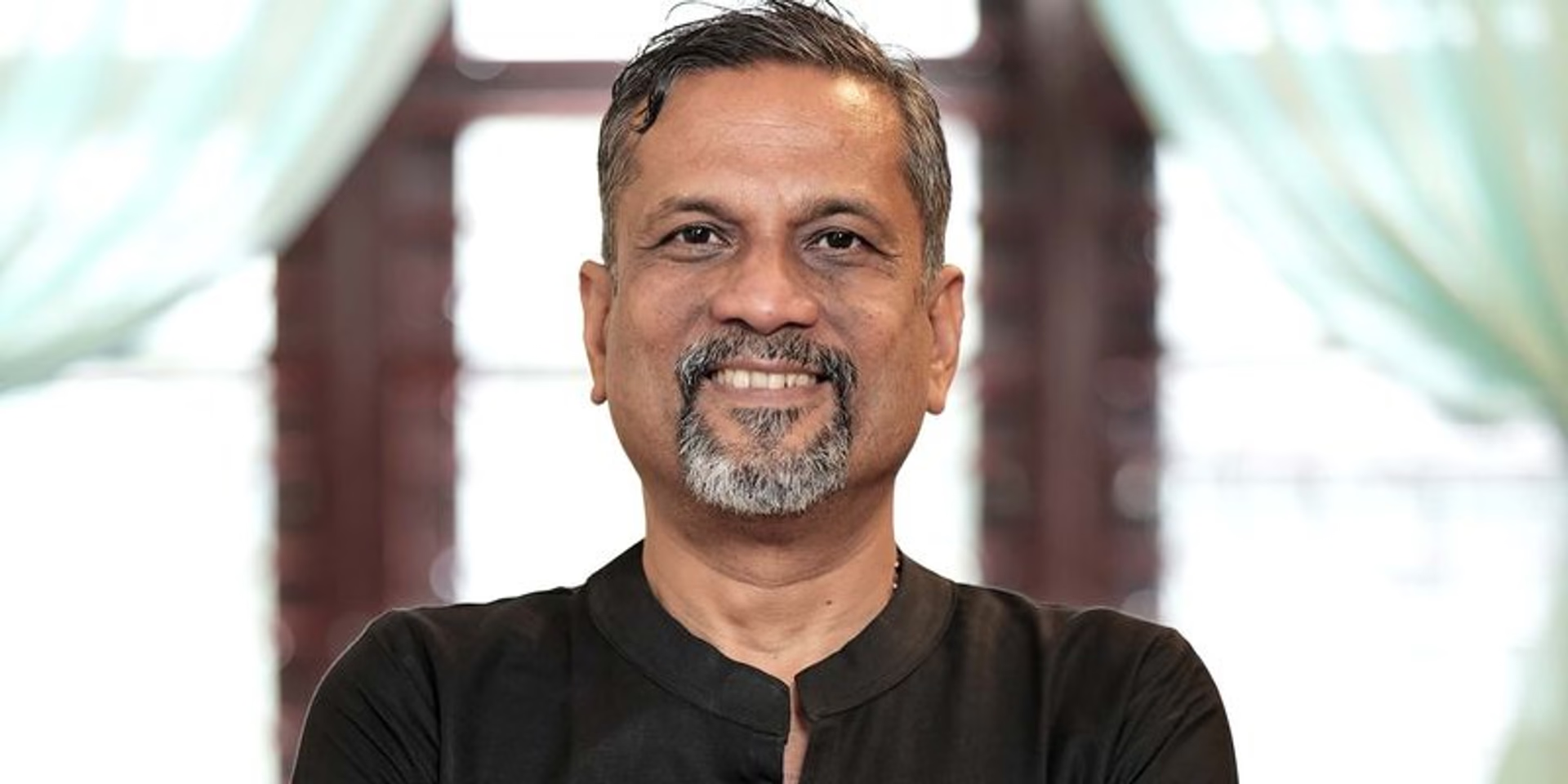
The rapid advancement of artificial intelligence has sparked a wave of anxiety across the global workforce. Software engineers and tech professionals are particularly concerned about their place in a future where machines can generate lines of code in seconds. Sridhar Vembu, the visionary founder of Zoho, offers a refreshing and grounded perspective on how to navigate this shift. His advice focuses on moving away from the narrow view of productivity and toward deep value creation.
Mastery of Domain Knowledge
One of the most significant points Sridhar Vembu makes is that programming skills are just the foundation. While they remain essential, they are no longer the primary differentiator. In the AI era, customers do not just pay for a working script. They pay for solutions that address specific business problems. This requires deep domain expertise.
Whether you are working in healthcare, finance, or retail, understanding the nuances of that specific industry is what makes you irreplaceable. AI can write a function, but it cannot yet fully grasp the complex regulatory landscape of a banking system or the intricate needs of a medical practitioner. Vembu emphasizes that being a domain expert allows a professional to guide the AI effectively and ensure the final product is truly useful.
Moving Beyond Simple Productivity Metrics
For years, the tech industry has obsessed over metrics like lines of code written or the number of features shipped. Vembu advises technical teams to stop focusing on these narrow productivity measurements. AI can undeniably speed up the early stages of development, such as creating a working prototype or a basic model. However, a finished product involves much more than just the initial code.
A polished application requires rigorous testing, security compliance, reliability, and long term support. These are areas where human judgment and oversight are critical. Instead of trying to outpace AI in speed, professionals should focus on how AI can help them offer a far better experience to the end user. The goal should be quality and customer satisfaction rather than raw output speed.
Eliminating Incidental Complexity
Modern software development is often plagued by what Vembu calls incidental or needless complexity. These are the unnecessary layers and complicated structures that have built up over time but add little real value to the user. AI presents a unique opportunity to streamline these systems.
By using AI to handle the mundane and complex parts of system architecture, engineers can focus on simplification. This shift allows for the creation of more intuitive and elegant software solutions. The role of the engineer evolves from a builder of complex structures to an architect of simplicity.
The Human Factor in Business
Despite the power of automation, Vembu believes that the human element remains at the heart of business. In recent interviews, he has noted that customers ultimately prefer to do business with people. Trust, dependability, and responsive support are qualities that machines cannot replicate.
He also points out that many essential human activities remain largely unaffected by AI. Roles involving mentoring, teaching, healthcare, and nursing require a level of empathy and human connection that AI lacks. By focusing on these human centric aspects of work, individuals can find long term security and purpose.
A Path Forward for the Youth
Sridhar Vembu is particularly optimistic about the young generation in India. He sees a population that is adopting AI faster than almost any other region. For the youth, the advice is clear: do not fear the technology, but do not rely on it exclusively. Use AI as a learning booster and a tool to solve practical, real world problems.
The future belongs to those who can bridge the gap between technical capability and human needs. By prioritizing security, reliability, and deep industry knowledge, you can ensure that you are not just surviving the AI era but leading it.